

Get involved in research: Mick's story
When Mick, 71, was diagnosed with Parkinson’s, he didn’t expect it would lead him to take part in more than 60 research studies.
This article is taken from Progress 2026, our research magazine. To view the full magazine, visit this page.
Hello, I’m Mick and I live with my partner Helen (pictured here with me) near Sheffield.
Since being diagnosed with Parkinson’s, I’ve been involved in many different research studies that I’ve found through the Parkinson’s UK Research Support Network. I wanted to tell you a bit about some of the projects I’ve been involved with, and hopefully show you that there’s something for everyone.
I first started to notice a tremor in my finger when I was particularly stressed. I found it more and more difficult to shave, and brush my teeth. I didn’t have a particularly easy diagnosis journey, but I was finally officially diagnosed with Parkinson’s in December 2013.
When I was diagnosed, it felt like a smack in the face. I wondered ‘why me?’. But I decided to educate myself on the condition, and in turn help others to understand more too. From that, I started to get more involved in research. I’ve been involved in between 60 and 70 research projects so far!
Taking part online
I’ve taken part in plenty of trials that have just been online. One was about brain training and keeping your mind active.
Both my partner, Helen, and I took part. We had to do these strange brain training puzzles online. It was quite tough but good fun!
It was great that Helen could do it with me. There are lots of opportunities for her to get involved too, and for other friends, relatives and carers of people with Parkinson’s.
Improving oral health in Parkinson’s
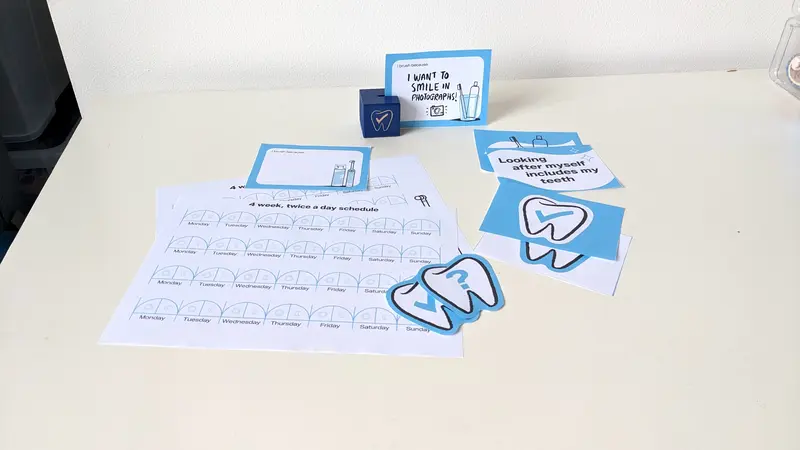
Luckily, my medication means I don’t have so much trouble brushing my teeth any more. But I’m still interested in this area. So I got involved with a study with a dentistry PhD student in Sheffield, Jessie Tebutt, who’s looking at improving oral health for people with Parkinson’s.
It involved travelling down to Sheffield and meeting Jessie for a chat about my experiences. Since then she’s stayed in touch, and I’m part of a group of people with Parkinson’s who help review her research. She sends us documents to ask for our feedback, and we make sure that her research keeps focused on the needs of people with Parkinson’s.
Jessie is a PhD student at the University of Sheffield, and is leading the oral health study
Jessie said: "This project aims to work with people with Parkinson's, partners in care and healthcare professionals, to develop a programme to support daily mouthcare for people living with Parkinson's at home.
"Mouthcare is an intimate, everyday aspect of health that is often overlooked or difficult to discuss. Project activities include things like keeping a diary, mapping routines at home, and prioritisation exercises, which are helping to design and develop the programme."
Taking a repurposed drug
I took part in a study that involved taking an approved drug, simvastatin, for 2 years alongside my usual medication. The study was looking to see if the drug could slow Parkinson’s getting worse over time.
I had to go for check ups every six months at Leeds General Hospital. They asked me to do some of the regular tests that I was used to from my appointments with my neurologist, like the finger tapping test and walking tests.
Some of the appointments needed me to be in an ‘off-state’, so the researchers could see how I was doing without my Parkinson’s medication. This meant I couldn’t take any medication after my last dose the night before the appointment. It wasn’t very comfortable, but the team checked on me often and I felt well looked after.
Making music in Manchester
I’m really passionate about music, so I was excited to take part in a study in Manchester that was looking at how music could help people with Parkinson’s manage symptoms and mood. I got to sit down with a composer at the Royal Northern College of Music, and tell them about my experience with Parkinson’s. They asked me what music I was into, and then they composed a piece of music just for me.
Along with 4 other people with Parkinson's who'd been involved, we had a free, open concert together with the composer, Emily Howard. My piece was called Seven Ways to Move. It was an amazing experience!
Why you should get involved with research
I hope you can see that there’s loads of different ways you can get involved with research. When I was first getting started, I thought to myself, ‘who’s going to do it if you don’t’? If we wait for others to do it, then nothing will happen. We’re the important missing piece of the puzzle by playing our part in the progress of Parkinson’s research.
Join the Research Support Network
You can make a start by joining the Research Support Network to receive regular emails with research opportunities, or call us on 020 7963 9398 to find out what’s happening near you.