

RHS Chelsea Flower Show garden tour
Explore the areas of our garden, deepen your understanding of Parkinson's and help raise vital funds for research.
Parkinson’s UK - A Garden for Every Parkinson’s Journey is designed by award winning gardener and BBC presenter, Arit Anderson, inspired by people living with Parkinson’s.
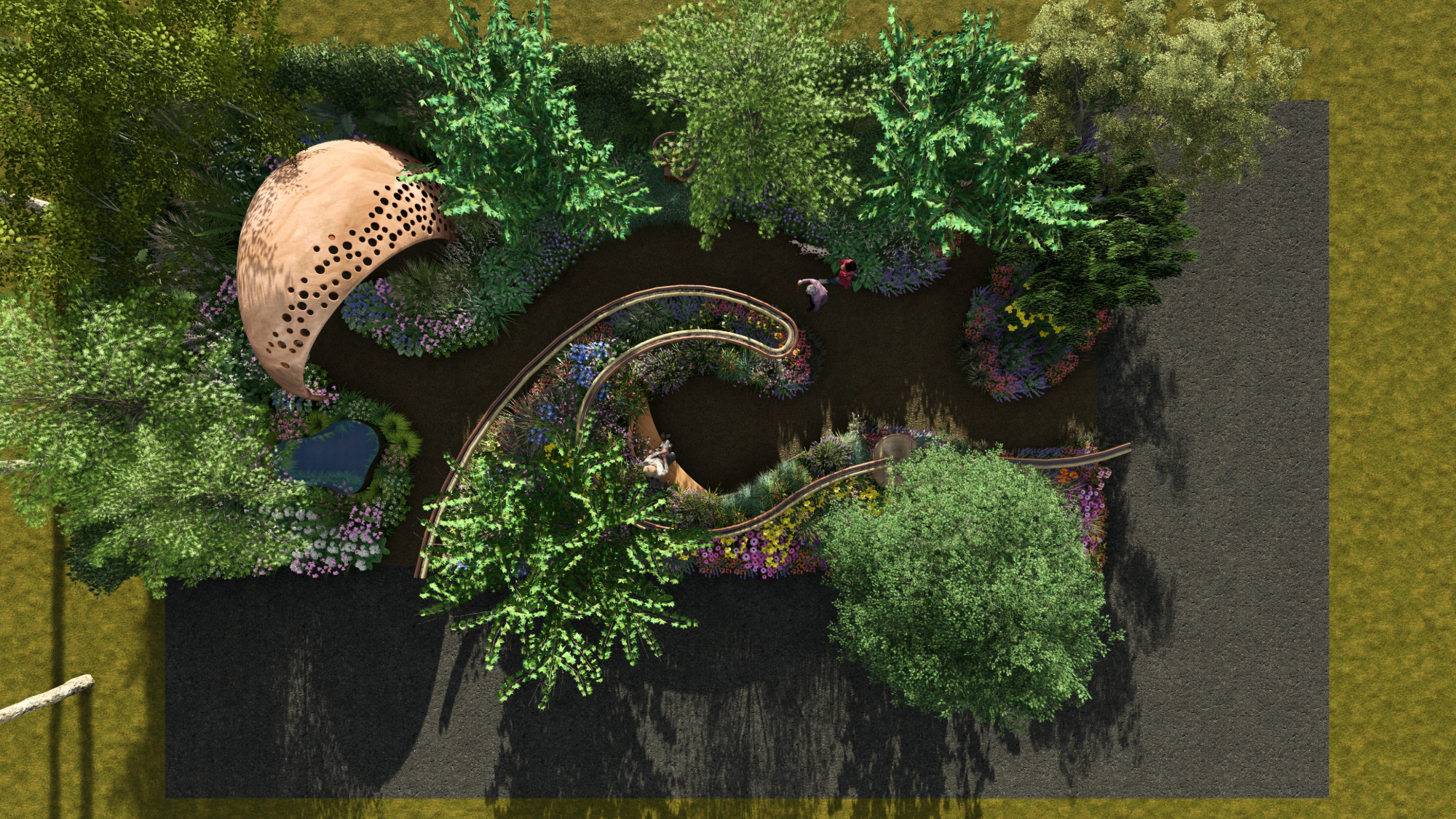
Take a journey through our garden and move across 3 different planting areas, each telling the changing story of Parkinson's.
Starting from the right-hand side, begin with the opening area, called uplift and energise. Follow the hand-rill through to the central calm and restful section and, at the end, take in the striking beauty of the night time area.
How we built the garden
Watch our video and find out how we built Parkinson's UK - A Garden for Every Parkinson's Journey.
This garden has been made possible by the generosity and support of Project Giving Back, a unique grant-making charity that funds gardens for good causes.
Uplift and energise
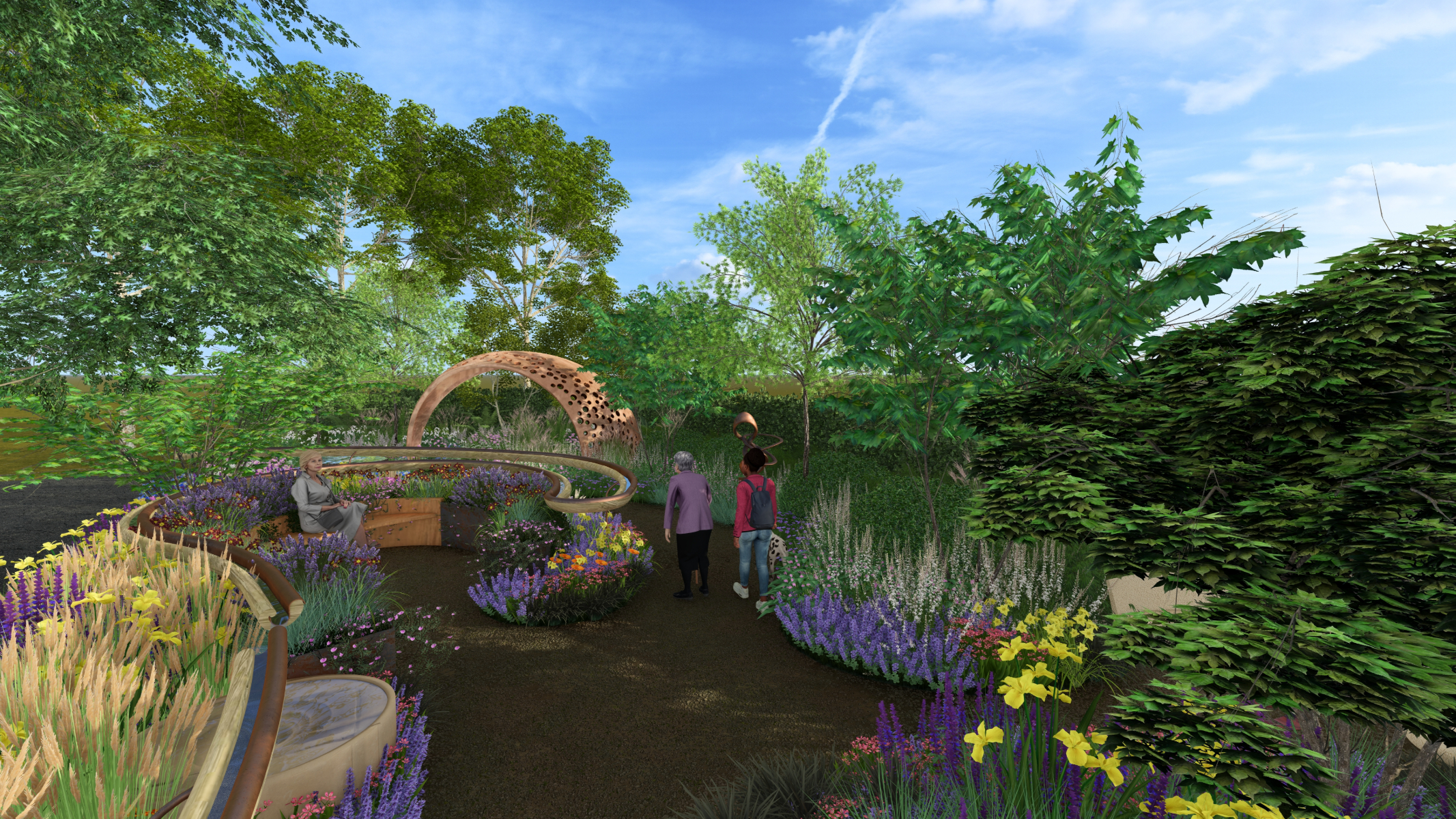
The journey begins with the uplift and energise area, featuring bright and bold plants like Peony ‘Flame’, Geum ‘Tempo Orange’ and Geranium ‘Patricia’. These plants reflect choices from the people living with Parkinson’s who inspired the design.
Visitors will also find organic tulips. They're the Parkinson’s community symbol, due to a variety named after James Parkinson who first identified the condition.
There is also a raised flower bed in this area. This is a key adaptation for gardeners living with Parkinson’s, so they can still tend to plants even with mobility challenges.
Anosmia is when your sense of smell becomes weaker, or you aren't able to smell anymore. It can be a common early symptom of Parkinson's.
It’s why our flagship flower is a new pink, scentless rose called Parkinson’s Resilience, kindly given to us by Harkness Roses. It has a mix of shades from the original salmon pink to hints of creamy amber with a constant dark red eye in the centre.
Buy a rose, and help fund life-changing research, on the Harkness Roses website.
To help with movement around the garden, we’ve designed the ‘hand-rill,’ a functional handrail with a water feature made from Accoya timber.
Not only used for support, the hand-rill also has water moving through it, creating a rhythmic sound.
This sound, which acts as a sensory cue for the brain, can help people with Parkinson’s start moving again if they experience 'freezing'.
Learn more about how our research project is helping people overcome freezing episodes.
Calm and restful
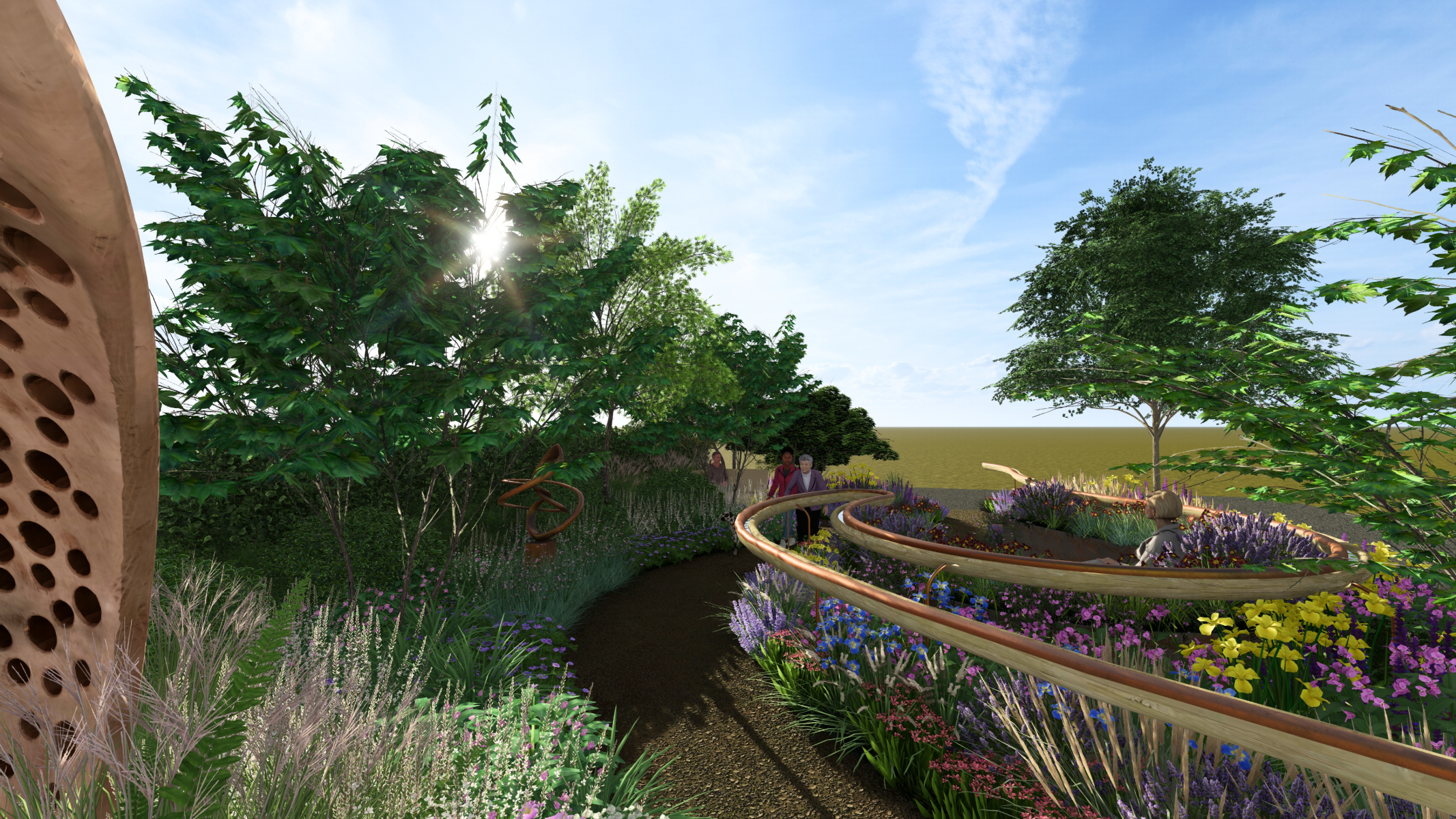
Following the hand-rill through the natural curve of the garden brings the second planting area, called calm and restful.
Parkinson’s can affect eyesight, with symptoms like blurred vision or difficulty judging distances. And fatigue is another major symptom, so opportunities to rest and relax are essential.
The plants in this zone are woodland-inspired, and their textures naturally create shapes that can be seen easily. Expect to find Trachystemon orientalis, Anthriscus sylvestris and Polystichum setiferum ‘herrenhausen’.
And take everything in from the comfort of the zone’s bespoke seating.
Designing the garden
To start the design process, we asked 15 people from the Parkinson’s community, our Head Gardeners, to tell us their hopes for the garden.
They wanted a garden that:
- feels like a safe space to relax, away from the challenges of living with Parkinson’s
- engages all the senses
- is bold, vibrant and seasonal, keeping the gardening interesting and joyful to look at
- is usable 24 hours a day, as some people with Parkinson’s have difficulty sleeping
- is an accessible space with easy transitions between areas.
Night time
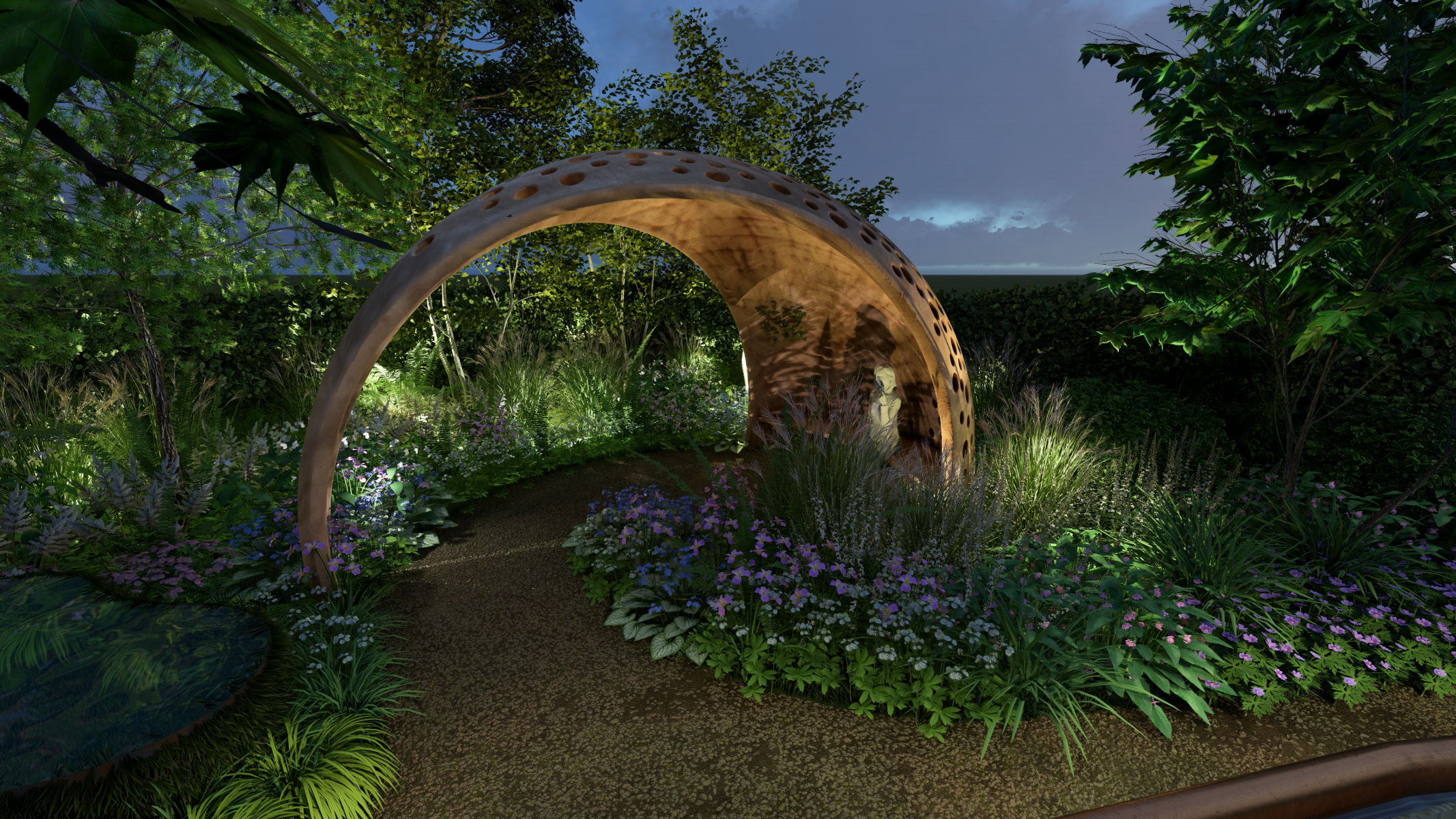
The final part of the garden is the visually striking night time area, defined by the stunning timber shelter.
Sleep problems and insomnia are common symptoms of Parkinson’s.
To help with this, the night time area of the garden features a ‘night shelter’, a curved timber structure with seating inside and perforations that allow light to filter through.
The shelter’s gentle illumination will help reflect the night sky, and the garden will be gently lit by warm light to ensure wildlife isn’t disrupted. A quiet place to rest at any time of day or night.
We have selected white-flowered plants that look appealing in low light, and attract pollinators. They include Geranium ‘White Ness’, Luzula nivea (snowy woodrush), and Hesperis matronalis (dame’s violet).
Exploring the garden
The pathway, which uses Yorkstone from the UK, is designed to support Parkinson’s gait. So visitors feel comfortable whether they’re walking or using a wheelchair.
It relies on curves, rather than straight lines or sharp angles, to help minimise ‘freezing’. The pathway is wider than usual, at 1.4m, for wheelchair use.
There are 3 seating areas for visitors to rest and take in their surroundings.
How you can help
Parkinson’s is on the rise and is often misunderstood. Someone is diagnosed with Parkinson’s every 20 minutes in the UK, and with over 40 symptoms, new treatments are urgently needed.
We’re making change happen through our powerful research programme. We drive progress in every area of research, partner with the Parkinson’s community and collaborate globally so we can find the cause, a cure and better treatments faster.
Your donation will help us drive forward research from cause to cure.
Donate today and power our research
Parkinson’s is on the rise. There are over 10 million people globally with Parkinson’s, 166,000 of them in the UK. With over 40 symptoms, people with Parkinson’s desperately need new treatments and a cure.
By making a donation, you'll help us fund a wide range of research, investigating everything from cause to cure to better treatments right now.
As the leading European funder of Parkinson’s research, we have a multi-million pound funding programme, decades of experience, strong international networks, and a fantastic community of people with Parkinson's powering our research.