

Working with the Parkinson's community on delirium in Parkinson's
Lynn and Ken first met when Ken was teaching badminton at the Northumberland Parkinson's group. Today, they run a table tennis group for the Parkinson's community in Teesside. They've been working with researcher Dr Rachael Lawson to improve how delirium is identified in people with Parkinson's.
People with delirium may suddenly appear confused, experience hallucinations, have difficulty following conversations or be unusually sleepy when unwell. It's particularly common for people who are in hospital and are experiencing pain, dehydration, constipation or an infection.
However some of the symptoms associated with delirium are also symptoms of Parkinson's, making delirium difficult to spot in people with Parkinson's.
Getting involved
Soon after she was diagnosed with Parkinson's, Lynn started taking part in research. Lynn explained:
"I wanted to do something useful and positive. I also found the whole research process fascinating, and still do."
Lynn and Ken first met Rachael when she was doing her PhD. They've been working together ever since.
Now a Senior Lecturer at Newcastle University, and after being funded by Parkinson's UK as a Senior Research Fellow, Rachael has been leading research to help healthcare professionals better diagnose delirium in people with Parkinson's. The research team have spoken to people with Parkinson's in hospital and have developed and tested a new screening tool for delirium in people with Parkinson's.
For Rachael, involving people with Parkinson's in her research was essential.
"You are approaching people who are at their most vulnerable. People who are really unwell in a hospital environment when there's a lot going on – a lot of people are very scared. It was important to make sure we were approaching it in a really sensitive way."
Working together
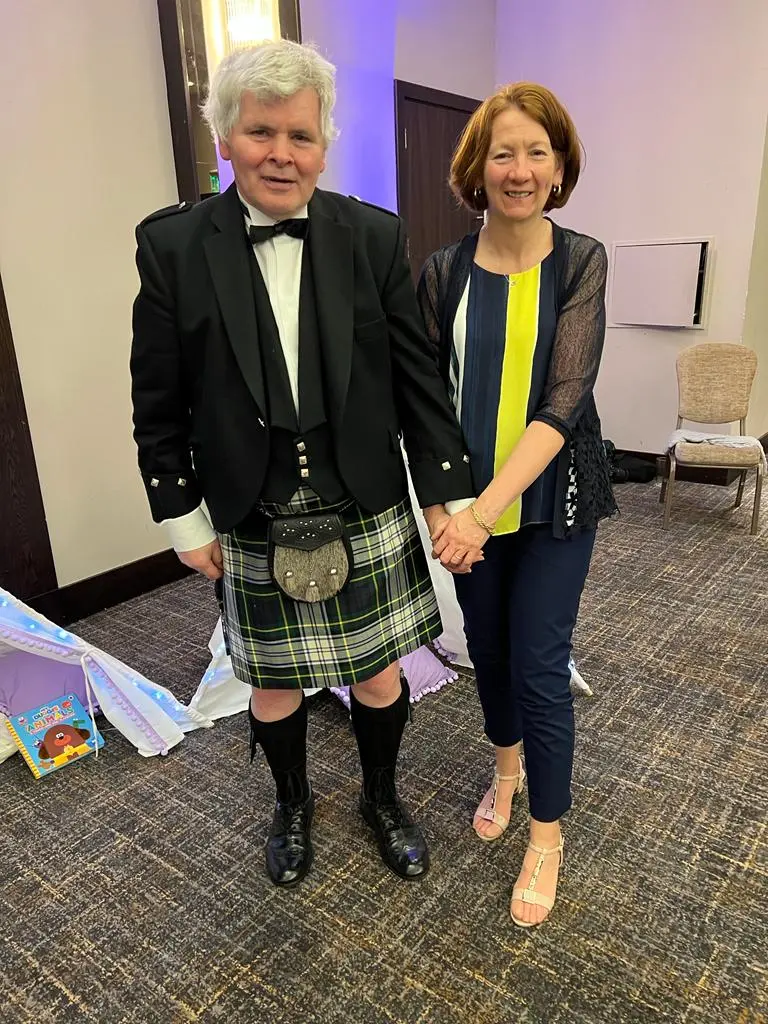
Rachael made Ken and Lynn feel valued and they've both been able to see the impact their involvement has had on the research. Feeling that they're helping others is one of the reasons they've stayed.
The advisory group has met in different ways: in person, online, via email, over the phone. This flexibility has helped people to stay involved in the project over time. Everyone could get involved with the parts they were interested in and step back when they wanted to.
Rachael shared: "When you're dealing with a condition like Parkinson's you understand that symptoms fluctuate. Not just day to day, but hour to hour too. It's important that people understand that it doesn't matter what your Parkinson's is like, you've got a place in the group and a role if you want one."
Impact on the research
The advisory group has had a huge impact on the research, ensuring the research is inclusive and accessible for a wide range of people. This includes those who'd never got involved in research before.
Rachael shared: "We adapted our study so that if you couldn't write, you couldn't read, you couldn't see, you could still take part. Lynn and Ken and our other contributors fed into how we did all of these different things."
For Rachael, the success of the study couldn't be separated from working with people with Parkinson's and those that support them.
The study found that healthcare professionals lacked confidence in diagnosing delirium in people with Parkinson's in hospital. To address this, Rachael and the advisory group co-developed tools to help researchers successfully spot and diagnose delirium in Parkinson's. This will help people with Parkinson's get the right care when they're in hospital. Lynn explained that working with people with Parkinson's hasn't been "an add-on or a tick box exercise. It's actually built into the infrastructure of the study".
As well as developing tools that successfully spot delirium in people with Parkinson's, involving people with Parkinson's has had a profound impact on the individual level. Rachael has found it motivating, and Ken and Lynn were able to support a friend with delirium.
Lynn said: "Research is something that can actually improve the quality of life of people with Parkinson's, and there are many of us who want to have an impact on that. We want to be involved in that because it makes you feel in control and like you're doing something worthwhile. And a study like this is incredibly worthwhile."
Read more about the research they've done so far in our news article.
Next steps
Next, Rachael, Ken, Lynn and the rest of the team are planning to implement what they've learnt so they can make a real difference to people with Parkinson's. They're still figuring out exactly what this will look like but, together, they hope to improve the care and support people with Parkinson's receive in hospital.
As Lynn said, "it isn't just a piece of research that's been done to be put in a journal on a shelf. This is something that's actually going to make a difference."
If you're interested in volunteering to help shape research, find out more about the PPI contributor role.