

How well do you sleep?
Getting a good night’s sleep is important for everyone, but Parkinson’s can make it more difficult.
We take a look at the research exploring sleep in Parkinson’s, and why it matters.
This article is taken from Progress 2026, our research magazine. To view the full magazine, visit this page.
What do we mean by a ‘good’ night’s sleep?
If you wake up and don’t feel rested, this might be because the quality of sleep you’re getting isn’t good enough.
For many people living with Parkinson’s, sleep doesn’t come in long, restorative stretches. It comes in fragments. A couple of hours at a time, interrupted and often exhausting.
The sleep cycle
As we sleep, our brain activity changes through four stages every 90 to 110 minutes, known as a sleep cycle:
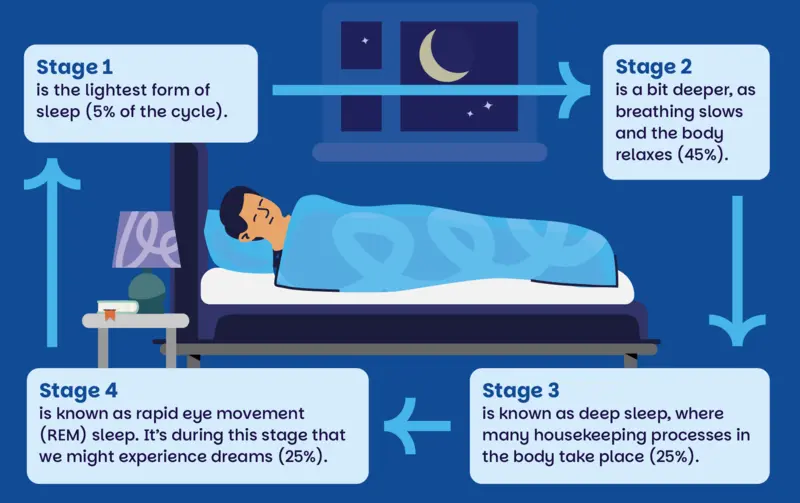
Deep sleep is most important for waking up feeling refreshed. So even if you’ve been in bed for the recommended 6 to 8 hours, if you haven’t had enough deep sleep, you might still wake up feeling tired.
What’s stopping you from sleeping well?
Living with Parkinson’s can make it difficult to get a good night’s sleep. 1 in 2 people with Parkinson’s experience some sort of trouble sleeping. This could be trouble getting to sleep, or difficulty staying asleep through the night.
In fact, many people with Parkinson’s rank sleep problems and feeling tired as their biggest priority for research.
There are also a number of other symptoms that can make getting sleep more difficult. This might include:
- nocturia, needing the toilet in the night
- restless leg syndrome, a feeling of intense discomfort in the legs and the urge to move
- dystonia, or cramping of muscles as a side effect of Parkinson’s medication
- nightmares or vivid dreams
- anxiety or depression
- daytime drowsiness or excessive sleepiness in the day.
Medication can also play a role in how well someone sleeps. If medication starts to wear off in the middle of the night, Parkinson’s symptoms like tremor or stiffness might interrupt sleep. A doctor might prescribe a longer acting or an additional small dose of dopamine medication to try and prevent this, but this doesn’t work for everyone.
Nicky has Parkinson's and is a Progress Editorial Board member: "I was finding getting to sleep really challenging, but I spoke to my neurologist who was able to prescribe a medication which helps me sleep much better. It doesn’t work for everyone but it’s always worth asking for help."
Sleep problems can be an early sign of Parkinson’s
Disrupted sleep could also lead to an increased risk of Parkinson’s, or could be an early symptom of the condition.
One sleep problem that’s very closely related to Parkinson’s is isolated REM sleep behaviour disorder (iRBD), which affects about 1-2% of the population in the UK.
iRBD causes someone to physically act out their dreams, moving their arms, legs, or even shouting while in stage 4 REM sleep.
Research has shown that as many as 7 in 10 people with iRBD will go on to develop Parkinson’s in the 10 years following their diagnosis. This means that studying people with iRBD can provide a good insight into the earliest changes in the brain in Parkinson’s.
Professor Michele Hu is a Parkinson’s UK funded researcher and consultant neurologist based at Oxford University. She’s leading a large project which is following people with Parkinson’s and iRBD over a long time, to understand how the conditions are linked and get worse over time. Her latest research project, funded by Parkinson’s UK, is looking at the potential of a new drug.
Michele is running the UK arm of a trial of a drug created by Australian company Syntara, which is designed to reduce inflammation. There’s some evidence that high levels of inflammation in brain cells might cause damage. They hope that reducing this inflammation might stop cells dying over time, therefore decreasing the risk of Parkinson’s.
I found it really distressing to be looking after people [with iRBD] where what you’re doing is just really tracking change over time and seeing if they’ll develop Parkinson’s. So I thought, let’s try and modify this by working on a trial to reduce it.
"The Syntara trial is a world first. It’s the first ever placebo-controlled trial of a tablet in people with iRBD. And so what we’re doing here is seeing whether the drug can reduce brain inflammation, by comparing brain scans before and after the study.
Why is a lack of sleep a problem in Parkinson's?
Aside from causing problems during the day, not getting enough sleep can have important consequences on our brain health.
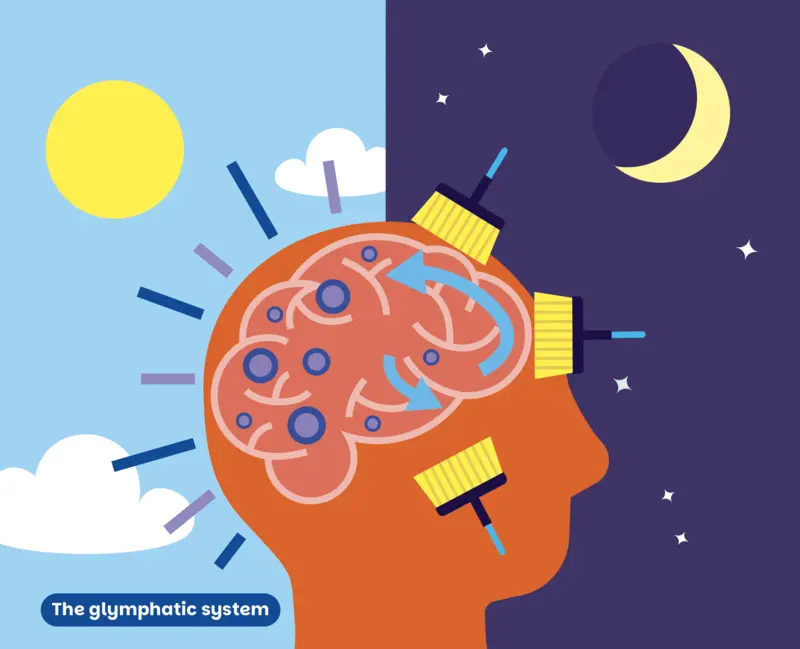
While we sleep, our brain performs important housekeeping to keep cells healthy and working well. One of the ways it does this is by activating the brain’s self-cleaning process, called the glymphatic system.
We’ve been funding Dr Ian Harrison’s work looking at the glymphatic system at University College London since 2019. We spoke to him about his progress so far:
What does the glymphatic system do?
"During the day your brain is busy, hard at work coordinating the messages that govern everything you do. This constant activity creates waste. And it needs to be cleared away at the end of the day.
The glymphatic system is a network that transports cerebrospinal fluid, or CSF, around the brain. It runs parallel to the blood vessels in the brain, and involves a series of star-shaped cells called astrocytes. Its job is to clean away those waste products in the brain when we’re asleep. A bit like putting the washing machine on at night.
We’ve discovered that the glymphatic system is involved in clearing away alpha-synuclein, which is the protein that starts to clump and cause damage in the brain in Parkinson’s."
What happens in Parkinson’s?
"In the last few years there’s been quite a few studies showing that the glymphatic system is less active in people with Parkinson’s. So waste proteins like alpha-synuclein aren’t being cleared away.
"What we still need to find out is when it stops working. So if someone has a sleep disorder like iRBD, does that lack of deep sleep mean that proteins start to build up in the brain, causing damage that leads to Parkinson’s? Or once someone has Parkinson’s, then does the glymphatic system stop working properly? Right now, we still don’t know."
Why is a good night’s sleep important?
"We know that the glymphatic system is most active during stage 3, deep sleep. So getting good, deep sleep is important to start the cleaning process.
"For years, we’ve thought of it as an on/off switch. So, as soon as the person falls asleep, their glymphatic system kicks in. But it’s more likely that it takes a few hours for the glymphatic system to slowly switch on. If you’re only getting a couple of hours of sleep at a time, it might not be enough to start the cleaning process."
How is your research tackling this?
"We’ve just been awarded Parkinson’s UK funding to run a project in collaboration with a biotech company called AstronauTx Ltd. We’re using a drug to increase deep sleep in mice that have a build-up of alpha-synuclein. If the mice are spending more time in deep sleep, we should be able to boost the glymphatic system. And because of that we’ll be able to reduce the amount of alpha-synuclein that we see in their brains. That’s the hope anyway. That’s what we’re going to try and do."
What can we do to improve our sleep?
Keeping a regular routine and good ‘sleep hygiene’ is important for getting a good night’s rest. Our Progress Board share their tips for getting a good sleep:
- Putting away screens.
- Avoiding caffeine and alcohol for at least 3 hours before bedtime.
- Sticking to a regular bedtime and wake up time.
- Keeping a sleep diary to help you remember and discuss challenges with your healthcare team.
- Having daytime naps before 3pm and not for longer than 20 minutes.
- Getting some fresh air and exercise in the day.
- Having a consistent temperature in the bedroom, between 16 and 18°C is ideal for sleep.
While there’s still much to understand about sleep and Parkinson’s, one thing is clear: good sleep is not just about rest.
It plays an important role in how the brain functions and repairs itself over time. And while not every night will be easy, small changes and the right support can make a meaningful difference.
Are you struggling to sleep?
If you’re struggling with sleep, speak to your healthcare professional or call our Helpline on 0808 800 0303 for advice. You can find tips and order our free Sleep and Parkinson's booklet on our information page.