
Living with pain and Parkinson's
Pain is a common side effect of Parkinson's, and affects more than half of people with the condition. Here, John and Colm share their experience of pain in Parkinson's and the various ways they manage it.
Colm was diagnosed with Parkinson's around 3 years ago
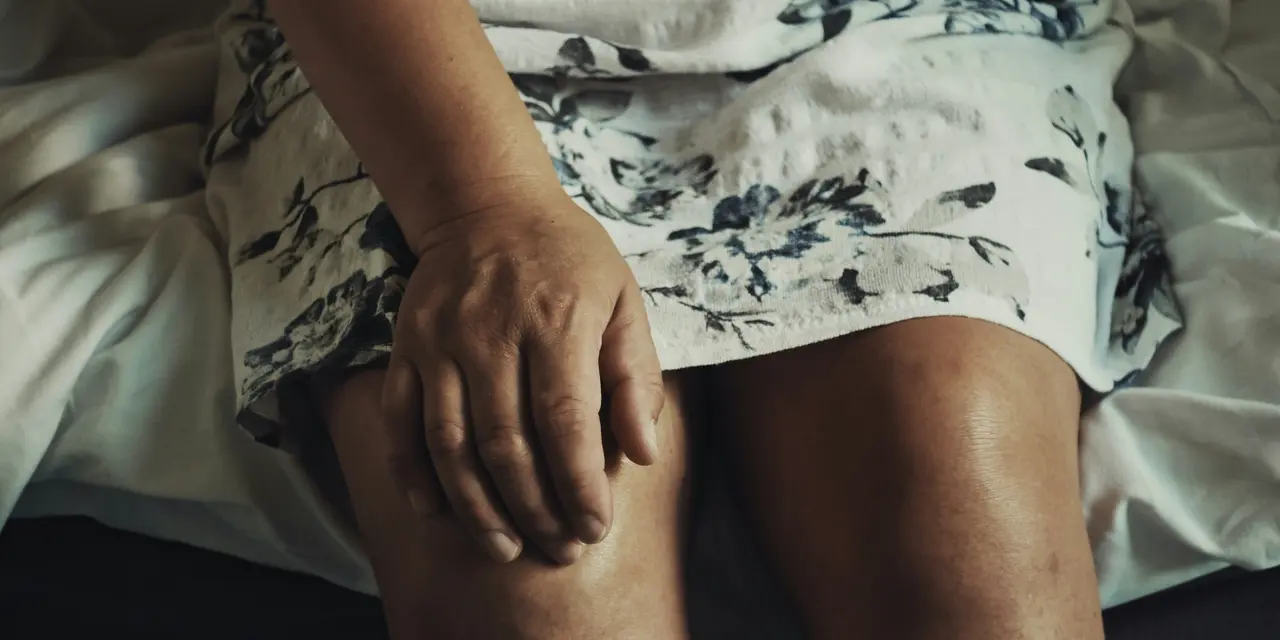
The 4 different types of pain I experience all affect my muscles and joints. This includes sudden-onset joint pain – typically a frozen shoulder, or pain when I bend an elbow or knee. It usually lasts between 6-8 weeks and will usually go away for a week or 2, only to reappear in another joint. It greatly restricts my movement and its constant nature can be frustrating.
I also have issues with leg cramps and dystonia, which I frequently experience when waking in the morning, or when moving between different ground surfaces. The cramps are very severe with sudden onset, but slowly wear off after some minutes.
My Parkinson's has worsened certain pre-existing conditions, including back problems, which were caused by a childhood injury. This has caused me painful episodes throughout my life, but my Parkinson's seems to have exacerbated this to the point where I'm totally incapacitated with pain and stiffness.
As a carer, I have no option but to try and carry on with my normal duties...I find it helps to wake about 2 hours earlier than normal to take my medication.
I keep an armchair and some dressing aids in my bedroom, as a bout of very severe back pain makes getting in and out of bed or dressing myself difficult.
I also experience muscle stiffness and inflexibility, which cause me pain due to over-exertion. This happens if I don't take regular breaks throughout the day. As a carer myself for 3 disabled family members, this can prove very difficult.
As a carer, I have no option but to try and carry on with my normal duties. However, if there's a day where the pain is particularly bad, or I know I have to do something relatively strenuous, I find it helps to wake about 2 hours earlier than normal to take my medication.
Since a back injury in 1985, John has experienced multiple types of pain. He was diagnosed with Parkinson's in 2016.
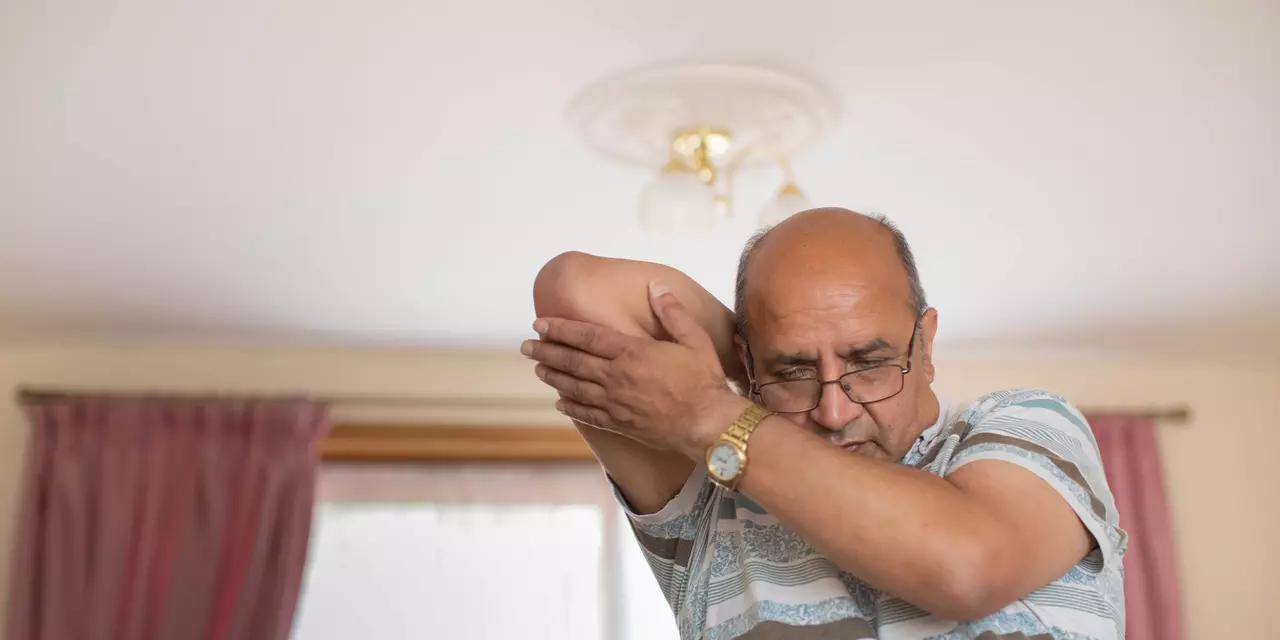
I’ve been experiencing varying degrees of pain since injuring my back, which caused me to have lower-back pain, which continues to this day. Since then, I have also developed pain in other parts of my body due to Parkinson’s, including my hands, ribs, upper back and shoulder.
The pain in my ribs is deep, aching and constant, and I get internal tremors in this area. However, the pains in my legs are sharp, intermittent and become very rigid, especially in my calves.
When I walk, the pain can get so bad that I end up having to stop and rest. On really bad days, I use a wheelchair. When I’m in a lot of pain, it affects my Parkinson’s symptoms even more, and also my spatial awareness, that I tend to lose my balance and fall or freeze.
I was referred to a pain specialist...who enrolled me on an 8-week pain management course led by a Parkinson's-trained physiotherapist. Now I do an hour of gentle movements and stretching every morning.
I can’t stand for long enough to wash and have a shave, or to wash the dishes, so I use a perching stool. I can no longer carry out my hobby of canoeing to the same degree. While I used to be able to do it all day, I'm now lucky if I can do it for an hour.
I was referred to a pain specialist, who prescribed me medication, and advised on workable changes to my lifestyle and diet. They also enrolled me on an 8-week pain management course led by a Parkinson's-trained physiotherapist. Now I do an hour of gentle movements and stretching every morning.
I’ve also tried swimming, acupuncture, and Chinese herbal medicines. I find that Jing Qi Shen Gong (an ancient Chinese practice combining relaxation techniques with posture-building exercises) works the best, as it builds muscle strength, flexibility, coordination and balance.