

Taking part in stem cell research: Andy’s story
We spoke to Andy about his experience taking part in a clinical trial exploring stem cell transplants as a potential treatment for Parkinson’s.
In Parkinson’s, brain cells that produce a messenger chemical called dopamine die over time. Unlike some other cells in the body, these brain cells don’t regrow. The loss of the vital brain chemical dopamine leads to some of the over 40 symptoms of Parkinson’s.
Stem cells might offer a way to replace some of those cells that are lost. We’ve invested millions in stem cell research to drive forward their potential to help boost dopamine levels in the brain. This potential treatment is now being trialled in people with Parkinson’s across the globe.
Read more about stem cells and the STEM-PD trial in our blog.
Andy's story
Andy, who lives in East Anglia and is part of the Parkinson’s UK Research Support Network, was diagnosed with Parkinson’s in 2010. He is one of 8 people who are taking part in the STEM-PD trial. The trial involves having brain surgery to transplant stem cells that have been given instructions to become dopamine producing brain cells directly into the brain. The aim is that they replace the cells lost in Parkinson’s. Andy underwent his transplant in 2024. We spoke to Andy about the trial and his experience.
How did you first become involved in stem cell research?
"A friend told me about an early stem cell research study called TRANSNEURO, and I had the opportunity to take part then. But at the time, it didn’t feel right. I was dealing with stress, a young family, and work commitments. Instead, I joined the control group for that study.
"When the opportunity came up again to take part in STEM-PD, I felt the timing was right. I was a suitable candidate, and I was ready to take part. Knowing that other patients had already gone through the initial transplant phase was also encouraging.
"I knew there hadn’t been any new treatment options for Parkinson’s in a long time. I realised that getting involved in as much research as possible would not only benefit me but also contribute to Parkinson’s research in general. To be honest, I felt really proud to be asked to take part. I almost felt duty-bound to come forward."
What is the STEM-PD trial?
"STEM-PD is an early (phase 1) trial testing whether surgically transplanting dopamine-producing cells made from stem cells could be a safe and effective treatment for Parkinson’s.
"This study focused on what dose, or amount of stem cells work best and how the body responds to the transplant. Half of the participants receive 7 million cells, and the other half receive 14 million cells. This helps researchers determine the correct dosage. There’s no placebo group in this trial, which was important to me. I didn’t want to go through the risks of the surgery to wonder whether I actually had the treatment."
How did the researchers and medical team make you feel comfortable?
"They explained everything in detail. We had a week-long preparation period before the operation, which gave us plenty of opportunities to ask questions. By the end of that week, I felt so confident going into the surgery.
"Before that the surgery was my biggest fear. I hate going to the dentist, let alone the idea of brain surgery! But I was really calm and prepared by the time the day came. I trusted the team completely. The amount of thought, ethics, and detail that went into the protocol was really reassuring."
What was the surgery like?
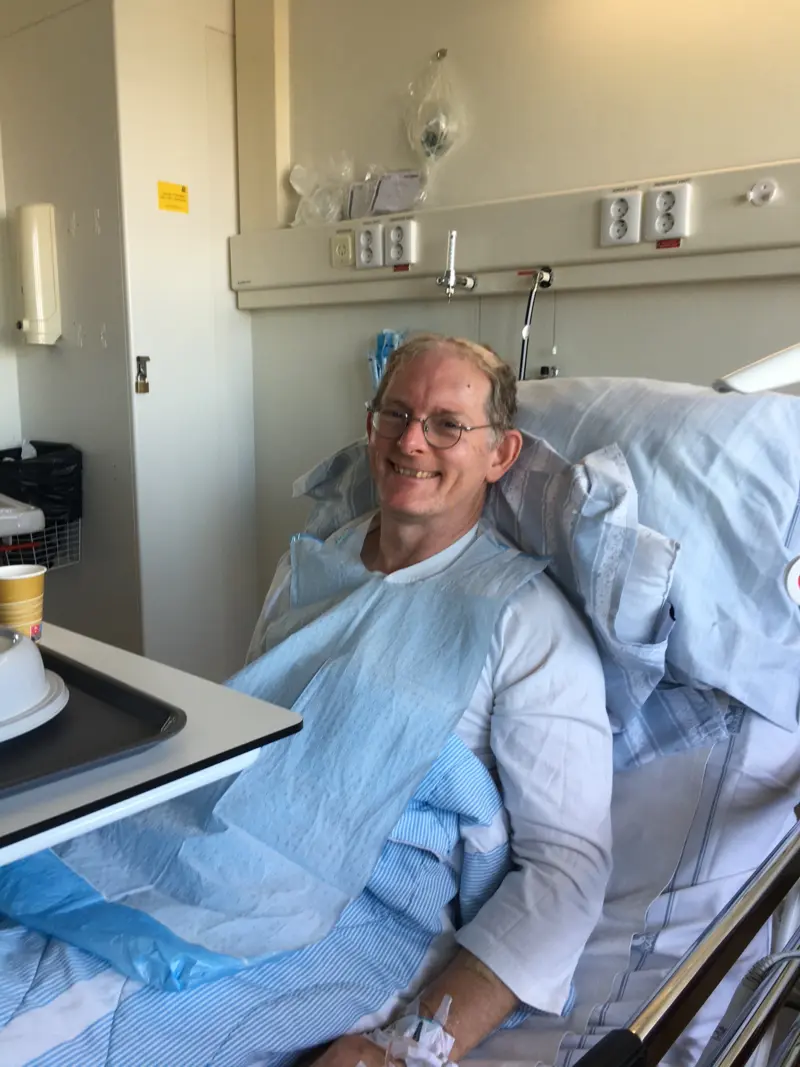
"The surgery took place in October 2024, in a hospital in Sweden. It was a 12-hour procedure under general anesthetic.
"To be honest, I couldn’t believe how easy, if that’s the right word, that part of it was. People told me it was a long time to be under general anaesthetic, and my biggest fear was the idea of brain surgery. The thought of someone opening up my brain and doing whatever they needed to do was terrifying. But on reflection, that part of the procedure was actually one of the least risky aspects. They’ve done hundreds, if not thousands, of similar surgeries for deep brain stimulation (DBS).
"What I hadn’t fully appreciated beforehand was the reality of the immunosuppressants and steroids they give you afterward. Because stem cells can be recognised as different by the body, the immune system could kick in and try and get rid of the cells. The doctors gave me medications to try and stop this, similar to what you’d get if you’d had an organ transplant. But in our case, we only have to take them for 12 months."
How do they monitor the success of the transplant?
"They do baseline scans and then follow-up scans at 6 months, using brain imaging. There will be more scans over time. I don’t fully understand the details, but it’s not about counting individual cells. It’s more about measuring the amount of activity in certain areas of the brain.
"In the areas where cells have died, the scans appear dull in colour. If the transplant works, those areas will gradually brighten over time as the new cells become active.
"The stem cells need time to take root and grow before the impact on my Parkinson’s can be measured. These are young cells being transplanted—it could take 3 years, or even longer, before they fully integrate and start doing their magic. The results from this trial will help inform a larger longer study to look at the impact."
What kind of support have you had?
"My wife, Nicki, came with me for the surgery. Since we’ve been back, she’s registered as a carer, with help from Parkinson’s UK in filling out the forms.
"She’s been amazing, but it’s been tough for her. She’s constantly monitoring me and can’t really switch off. In a way, it’s good that she now has recognition as a carer and some recompense to help maintain her quality of life.
"I’ve got mobile numbers, emails, and even WhatsApp groups to stay in touch with the researchers. They’ve been very accessible and supportive throughout the entire process."
How has the trial impacted your life?
"After starting the trial, my medication tripled. I went from taking 12 tablets a day for Parkinson’s to 33 tablets a day. I even had a horrendous spreadsheet to keep track of it all! But a lot of these were immunosuppressants. I had to take them to stop my body rejecting and trying to fight the implanted cells in my brain.
"That said, I think the trial has been a success so far. After having the procedure, I’m still here, and it hasn’t made things worse. For me, that ticks both boxes. Whatever happens from this point on, it’s all contributing to the research knowledge we need."
What were the benefits of taking part?
"Being part of the research meant that every 6 months, I go through lots of tests. For me, that was a way to track how my condition was changing. By repeatedly doing the same tests, I could notice any differences over time.
"It also gave me a better understanding of what was going on in my brain. Somehow, that made me feel more in control and aware of my condition, even though there’s still so much we don’t know.
"My hope is that it will provide a 'top-up' of the cells I’ve lost. I know I’ll still have Parkinson’s, and the underlying cause of my brain cells dying won’t go away. But I hope this transplant will give me many years, or even decades, of dopamine-producing cells.
"But I’m also managing my expectations. I’m not expecting anything specific. As long as the procedure doesn’t make things worse, I’ll be happy."
What is your long-term hope for stem cell therapy?
"I wouldn’t call it a cure, but it could help keep the condition at bay for much longer.
My hope is that this treatment could eventually be offered to people early on in their Parkinson’s journey. If it can give them a good quality of life and help them stay in work or maintain their daily routines, that would be incredible.
"I’m also really excited about the future of this research, especially with some of the advancements I’ve read about. For example, Parkinson’s UK is funding Dr Harry Bulstrode’s work in Cambridge on using techniques to control what the transplanted cells release into the brain. That kind of precision could be a game-changer.
"Of course, it’s still going to be many years before stem cell therapy becomes a standard treatment. There are so many ethical considerations and complications to work through. But the progress we’re seeing is very, very encouraging."
What would you say to others about taking part in research?
"If we want to find a cure, we have to help the researchers do it. It’s so important to get involved.
"Not all studies involve surgery or invasive procedures. Many just require filling out surveys or providing feedback. Even that kind of participation can make a difference.
"We’re all unique, and the more researchers understand the different ways Parkinson’s affects people, the closer we’ll get to answers.
"Plus, being involved in research can help you personally. It gives you a better understanding of what’s going on with your condition, which can help you cope with it better. And, of course, it moves science forward. There’s no failure in research, it’s all feedback."
Read more about Andy’s experience of the STEM-PD trial on his blog, Parkinson’s with a Purpose.
With thanks to Andy for giving up his time to share his experience, and for reviewing the blog.
Hear more from Andy
Andy shared his experience of taking part in research, including in the STEM-PD trial, at Par-Con 2025. Catch up with the recording on YouTube.