
From movement to momentum: the digital revolution in Parkinson’s exercise rehabilitation
Last year we heard from Kneu Health on how smartphones are transforming Parkinson’s care in the NHS. Here, we catch up with Dr Ledia Agley, Head of Customer Success at Kneu Health, to take us through how their technology has recently supported a Parkinson’s exercise programme at Leeds Teaching Hospitals NHS Trust.
Exercise and physical activity are often discussed as the new medicine for Parkinson’s. Growing evidence shows that exercise and physical activity can slow functional decline, improve balance and strength, and help people maintain control of their condition. But like any effective treatment, exercise needs the right dose, frequency, and type tailored to each individual.
To prescribe exercise as precisely as medication, clinicians need objective data: information that shows how symptoms are changing and which activities have the greatest impact. That’s where the Kneu Health app bridges the gap by providing measurable insights to guide care, support multidisciplinary teams, and help people living with Parkinson’s see their own progress.
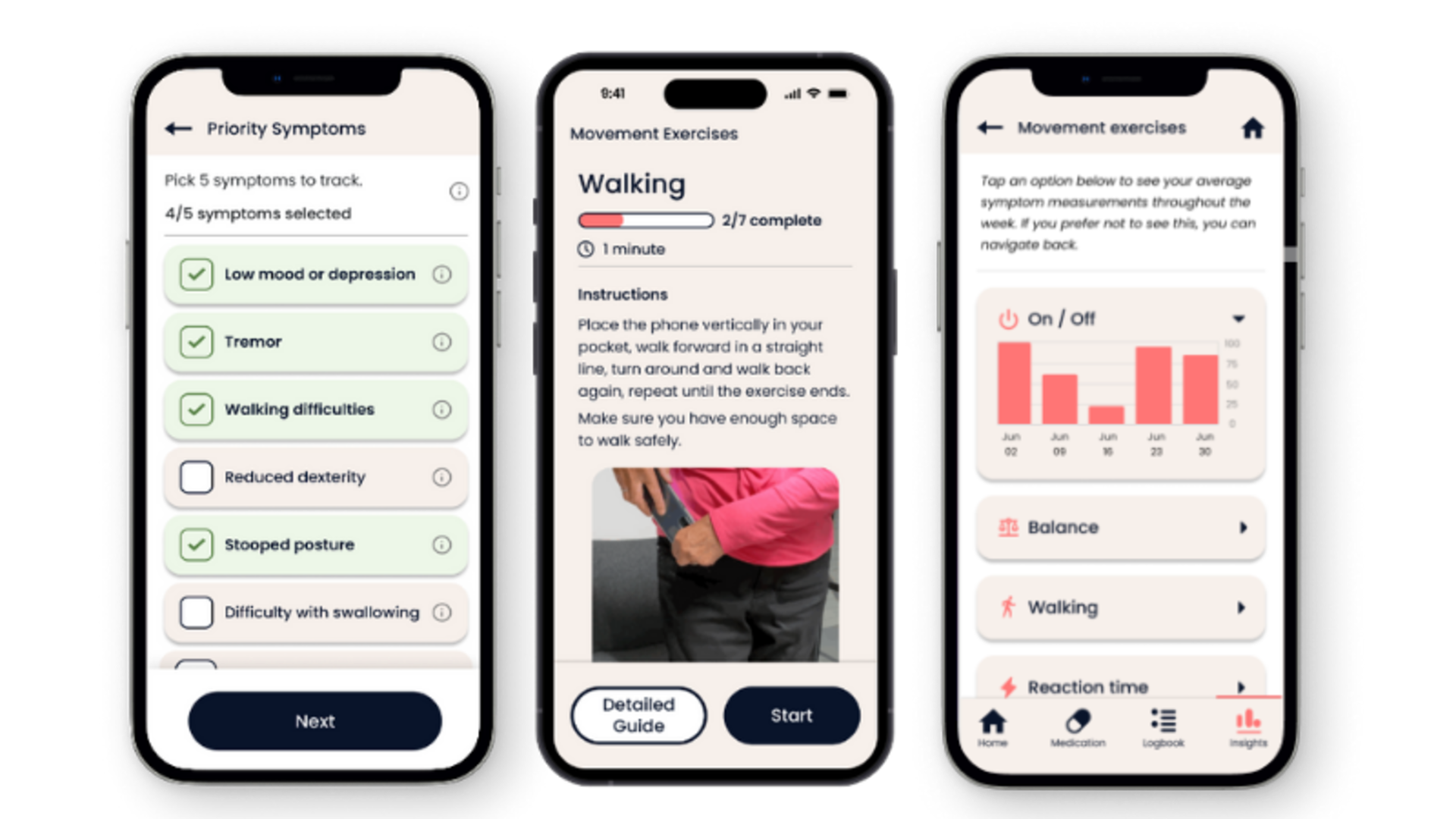
Kneu Health turns a person’s smartphone into a regulated medical device. Using built-in sensors, it captures data on walking, balance, dexterity, tremor, and reaction time, all in just a few minutes at home. The results are analysed using clinically validated artificial intelligence (AI) models and instantly shared with the NHS clinical team through a secure dashboard.
Seeing progress in practice
Ally Whelan, Highly Specialist Physiotherapist at Leeds Teaching Hospitals NHS Trust, leads an 8-week, high-intensity exercise programme for people with Parkinson’s. The class is suitable for people without significant motor symptoms, including newly diagnosed patients, and aims to promote the role of exercise in managing the condition. Ally’s team wanted to explore whether digital tools could provide richer, more accurate insight into patient progress.
Alongside standard assessments, participants used the Kneu Health app to complete weekly home-based tests measuring balance, walking, dexterity, tremor, reaction time, and voice. Using the phone’s built-in sensors, the app generated objective, symptom-specific data and a composite Kneu Health Motor Score, alongside self-reported health measures.
This approach allowed Ally’s team to compare traditional outcomes with detailed, real-world data and to see whether objective digital insights could enhance motivation, engagement, and clinical decision-making.
The value of insight
Across 6 participants, the average Kneu Health motor score (similar to UPDRS Part 3) improved by 2.4%, reflecting a measurable reduction in motor symptom severity, while self-reported health perception increased by 26%, showcasing the overall benefit of the 8-week programme.
Traditional outcome measures failed to detect changes in balance and gait in 33% of patients, particularly those with high baseline scores due to ceiling effects. The digital assessment via the Kneu Health app, however, captured 10–25% gains in balance and walking performance. Overall, digital measures provided a more sensitive, symptom-specific view of progress, highlighting subtle improvements in walking quality, balance, and coordination that standard tests missed.
When speaking to one of the participants they mentioned:
"I was already very active, and I didn’t think there was going to be much difference, but it was really good to see data showing that I had improved. That encouraged me to keep using the app and stay active."
This suggests that integrating digital motor assessment alongside physiotherapy can:
- make exercise benefits visible
- reinforce motivation
- support truly data-driven clinical decisions.
This case highlights how objective feedback empowers patients, reinforces the effectiveness of exercise, and motivates continued engagement.
Ally also stated:
"We use traditional outcome measures in the group but there’s often a ceiling effect, as many of the patients don’t have significant motor symptoms early on. I was surprised to see how notable the changes were in some cases that weren’t captured by our usual outcome measures.
"One specific patient didn’t recognise the benefit of the exercise we were doing, as their traditional scores didn’t change much. But after analysing their app data, we could show them that their Parkinson's symptoms had improved and the areas they needed to focus on in the future. Kneu Health is a valuable tool in motivating patients to continue with Parkinson’s specific, targeted rehab.
"I feel the Kneu Health app could be used not only to predict the need for physiotherapy intervention but also as a motivational aid to participation, particularly in the newly diagnosed patients."
6 months after completing the programme, 67% of participants continued using the app to track their symptoms.
Another participant shared:
"The app is straightforward to use. I use it to monitor my condition and the report says I am stable. I find it reassuring and I’m still continuing to do some of those exercises from the class."
This sustained engagement suggests digital feedback can extend the benefits of rehabilitation far beyond the clinic, promoting long-term self-management and stability.
Making progress visible, for patients and clinicians
Digital insight doesn’t replace clinical expertise, it enhances it. By giving clinicians objective, real-world data between appointments, it helps them:
- personalise exercise programmes
- detect changes early
- allocate resources more effectively.
For patients, it offers reassurance and motivation, tangible proof that what they’re doing matters.
Across 11 NHS sites and over 1,500 people living with Parkinson’s, early findings with Kneu Health show improved patient engagement, greater clinic efficiency, and fewer hospital admissions.
Exercise has always been an essential part of Parkinson’s management, but digital tools are redefining how it’s delivered, measured, and valued. The ability to see improvement in numbers, graphs, or simple trend lines, reinforces belief, builds momentum, and turns daily effort into visible progress.
As Ally concludes:
"By giving people living with Parkinson’s tangible evidence of their progress, we’re reinforcing that what they do matters. And that’s one of the strongest motivators there is."
Find out more about Kneu Health on their website. Or email Ledia at [email protected].
Evidence and journals
Read the evidence on the benefits of exercise and physical activity for Parkinson’s:
More news for professionals
Keep up to date with what’s happening around the Excellence Network.