
How small tests of change and weekly dashboards improved the delivery of time critical medication at Cornwall Partnership NHS Foundation Trust: best practice case study
Service improvement projects that focus on a specific issue and communicate progress can create positive impact. This case study details how a dashboard and good communication led to a 40% improvement in the delivery of Parkinson's medication on time, at Cornwall Partnership NHS Foundation Trust.
- Case studies
- Q and As
- Consultant
- Doctor (geriatrician)
- Doctor (neurologist)
- Doctor (other)
- Nurse (Neurology specialist)
- Nurse (Parkinson's nurse)
- Nurse (other)
- Pharmacist
We spoke to Lynne Osborne, Nurse Consultant, Kylie Lock, Quality Lead and Luke Huntley, Pharmacist about their work to continually drive improvement in delivering Parkinson's time critical medication (TCM).
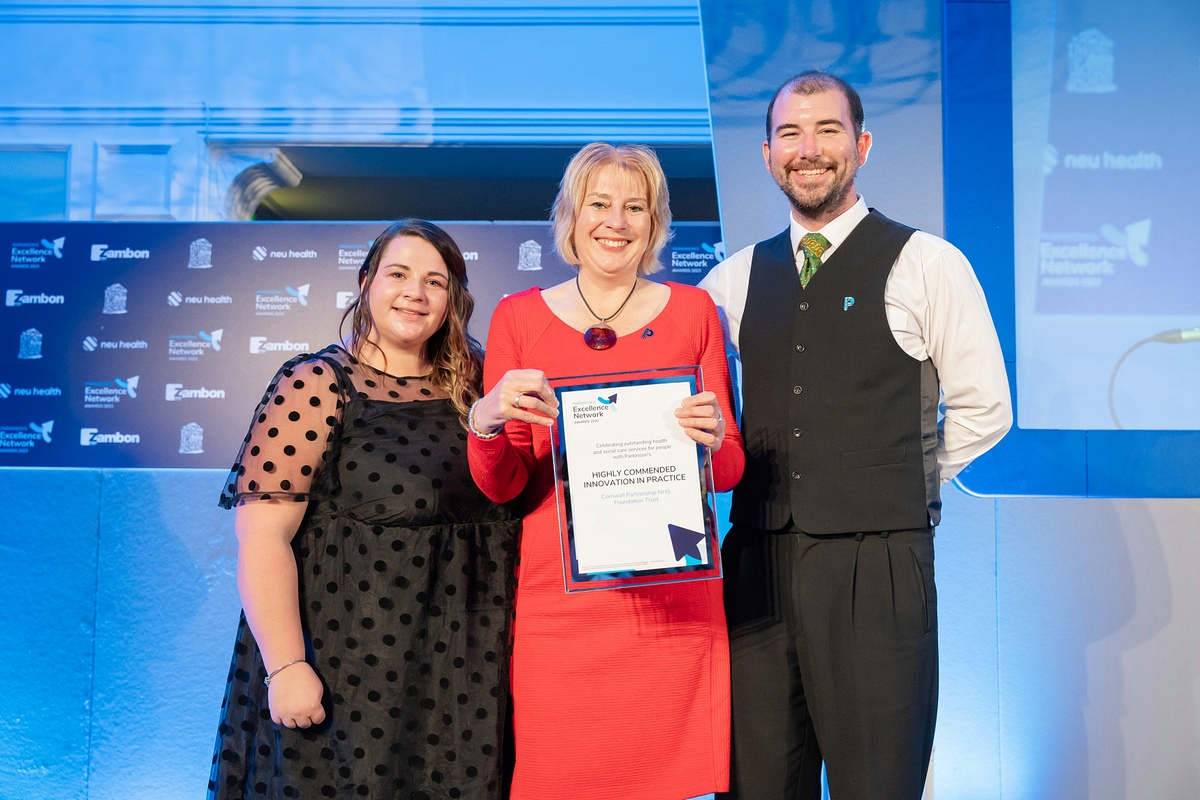
Left to right: Kylie Lock, Quality Lead; Lynne Osborne, Nurse Consultant; Luke Huntley, Pharmacist
Why did you work to improve the delivery of Parkinson’s TCM for your patients?
Luke was a pharmacist on an inpatient ward when a patient with Parkinson’s was admitted. He recognised that changes and fluctuations in the patient’s condition were linked to his medication. Luke escalated these concerns with the nursing team and the Parkinson’s specialist team and the quality improvement project was born.
What have you done to improve the delivery of Parkinson’s TCM?
Using a quality improvement approach, we've tried small tests of change across our inpatient wards. These include targeted training sessions, posters with QR codes linking to short videos, information and resource packs and pill timers for use on the wards.
Our Parkinson's specialist nurses hold regular drop in sessions on MS Teams and collate and send out a weekly dashboard showing each ward's performance.
This has been a real team approach with suggestions from our pharmacy team, medicines management link nurses on the wards, quality team and the Parkinson’s specialist nurses.
Did you involve people with Parkinson’s?
Yes, we seek feedback from our patients on a regular basis as part of our commitment to continuous improvement. Here is one example:
“I do not need to keep repeating everything when the ward staff have more knowledge about Parkinson’s. This gives me reassurance that my medication will be given on time.” Feedback received from a person with Parkinson's.
We also regularly speak with carers who are pleased to see the information and resources used and displayed on the wards, acknowledging its importance as one of the Trust’s priorities.
How important has the target, and report showing the % of doses outside of the target 30 minute range, been to motivating teams to improve the delivery of TCM?
The simple system of emailing the weekly dashboards has a huge impact on our performance, and it supports the project team to identify wards that may need more support. We award teams 'gold', 'silver' or 'bronze' depending on their performance and celebrate those teams that are sustaining improvements. This boosts morale and gives a sense of ownership and accountability to our teams so it’s ward-led rather than a top-down approach.
Ward managers are keen to look at the data and identify where there might be areas they can focus on – even down to shift times. We are really proud of the data we produce and how we can drill this down to patient level when required.
What impact has this project had on patients?
Since the start of the project we have seen a 40% improvement in TCM for our patients. We are now regularly hitting between 90-95% of all Parkinson's medications being administered on time and have sustained this improvement for the last 2 years.
Staff are aware of the patients with Parkinson’s on the ward and are able to articulate how they are working together to ensure their medication is administered on time.
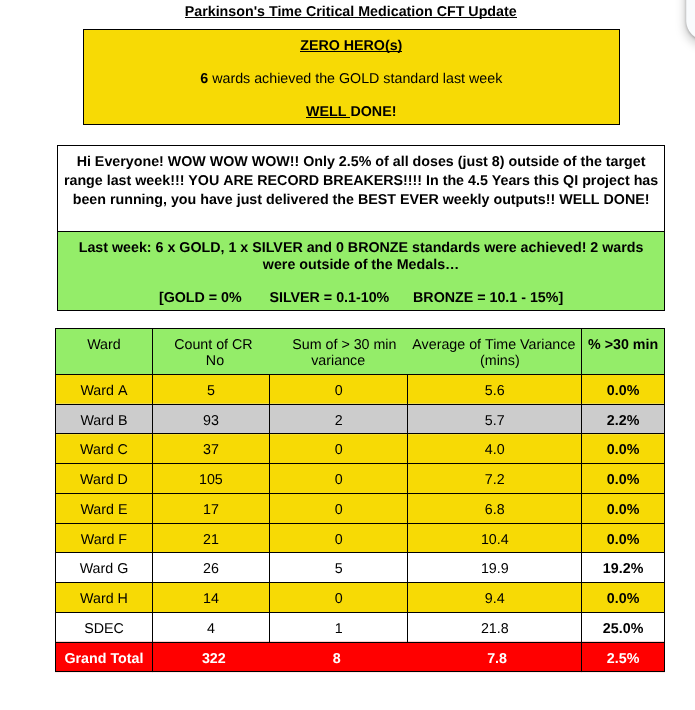
Figure 1: An example of Cornwall Partnership NHS Foundation Trust's time critical medication dashboard.
The team's top tips to improve the delivery of Parkinson's TCM for patients.
Communicate
Engage your stakeholders and get their feedback. Speak to frontline staff on the ward to understand any potential barriers and how you can work together to overcome them.
Start small
Be aware of your circle of influence and what you can do to create change. If you can’t create a new training package immediately, then start small with easily accessible videos, QR codes on posters – making the information and resources easily accessible for busy working staff.
Use your data
Ensure you have access to the data so you can see if any changes have made an improvement. Data has been key for us in really driving the improvement and it gives the wards something to work towards as well as a bit of healthy competition!
Don’t do it alone
Build a team around you and use your networks to help push the project forward and work to your strengths. Continue to celebrate success throughout and recognise every win, no matter how big or small.
We review our resources for health and care professionals every 3 years to make sure they're clinically accurate. To learn more about our professional resource directory, get in touch at [email protected]
We value your feedback. Complete our short form to help us improve our support for health and care professionals.